

Discovery: The spark for science
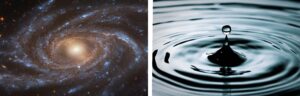
For a scientist (and indeed for anyone thinking scientifically about the world around them), every day holds the possibility of discovery — of coming up with a brand new idea or of observing something that no one has ever seen before. Vast bodies of knowledge have yet to be built and many of the most basic questions about the universe have yet to be answered:
1️⃣What causes gravity?
2️⃣How do tectonic plates move around on Earth’s surface?
3️⃣How do our brains store memories?
4️⃣How do water molecules interact with each other?
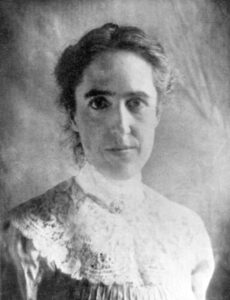
Astronomers had long known about the existence of variable stars — stars whose brightness changes over time, slowly shifting between brilliant and dim — when, in 1912, Henrietta Leavitt announced a remarkable (and totally unanticipated) discovery about them. For these stars, the length of time between their brightest and dimmest points seemed to be related to their overall brightness: stars with slower cycles are more luminous. At the time, no one knew why that was the case. Nevertheless, this discovery allowed astronomers to infer the distances to far-off stars, and hence, to figure out the size of our own galaxy. Leavitt’s observation was a true surprise — a discovery in the classic sense — but one that came only after she’d spent years carefully comparing thousands of photos of these specks of light, looking for patterns in the darkness.